Writing an acceptance campaign that actually protects you
Acceptance is the only point at which an operator has leverage. Most acceptance criteria are written in a way that gives it away.
ReadTelecom system integrator · Dubai, UAE
Quantum Telecom designs, supplies, integrates, deploys and operates end-to-end mobile networks across the UAE, GCC and MENA — 5G Core, Open RAN, IP transport, IMS, private 5G, AI Ops and CPE. You sign one contract. We own the seams.
In a hurry? Open the sales desk and get a costed answer moving in two minutes.
Built to standard
— Partners & ecosystem
Core, radio and transport platforms — the 4G/5G dual-mode core, Open RAN radio range and the 10G and 100G site routers Quantum designs into operator networks.
Distribution and supply across the enterprise and data-centre ecosystem, giving Quantum a route to vendor stock and support into GCC and MENA markets.
Quantum supplies and integrates across the following vendor ecosystems and standards: VMware by Broadcom, Huawei, Lenovo, H3C, Eaton, StormWall, Vinchin, Digifort, Viettel High Tech, Open RAN, 3GPP Release 16, O-RAN Alliance, Cloud-native 5GC, eCPRI fronthaul, IEEE 1588v2, ETSI NFV, VoLTE / VoNR, Network slicing.
Quantum is vendor-independent and supplies and integrates across the ecosystems above. Product names and marks are the trademarks of their respective owners and are shown to describe the scope Quantum works across; they do not themselves imply an endorsement by those owners.
01 — The integration gap
Disaggregation gave operators choice. It also gave them five suppliers, four support contracts and nobody who owns the interface where the fault actually sits. Quantum exists to close that gap.
When the core blames the radio and the radio blames the transport, the operator becomes the integrator by default — on its own time and budget. Quantum takes that role contractually.
Multi-vendor programmes slip at the handovers, not the milestones. A single delivery owner running one integrated plan removes the wait states between suppliers.
Interoperability, acceptance and end-to-end KPIs sit between contracts. Quantum signs against the network's performance, not a component's datasheet.
03 — Capabilities
Every layer an operator needs to carry traffic, bill for it and keep it running — engineered, supplied and supported by the same team.
Cloud-native 4G/5G dual-mode core combining EPC and 5GC on one platform. 3GPP Release 16, NSA and SA, eMBB, URLLC and mMTC, network slicing and MEC. Up to five million subscribers per cabinet.
ExploreOpen RAN compliant macro, micro and small-cell radio across n41 and n78 — from 8×5W indoor units to 320W 16-layer MIMO macro sites. Planned, supplied, installed and optimised.
ExploreCell-site and metro aggregation at 10G and 100G. Clocking, aggregation and backhaul of mixed 3G, 4G and 5G traffic across any available transport, from any vendor.
ExploreNFV-architected IP Multimedia Subsystem delivering VoLTE, VoNR, HD voice and video. Two-second call setup, AMR-WB and EVS codecs, H.264/H.265 video.
ExploreStandalone private networks including network-in-a-box with core and RAN in one unit — 1K to 10K subscribers, up to 100 cells, edge computing and slicing. Fixed or on the wheel.
ExploreNOC, O&M and optimisation with AI-assisted assurance — anomaly detection, capacity forecasting and automated first-line response on live networks.
ExploreFixed-wireless access CPE, routers and industrial gateways, certified against the network they attach to and logistically supported across the region.
ExploreNew and certified refurbished telecom hardware sourced against part number and quantity, with realistic lead times and Dubai as the regional staging hub.
ExploreGreenfield mobile operator build: spectrum-to-subscriber across core, radio, transport, voice, OSS/BSS and operations under a single delivery plan.
Explore02 — The stack
A working mobile network is six systems that have to agree with each other. Most suppliers sell one. Quantum signs for all six behaving as one.
Macro, micro and small-cell radio across n41 and n78 — from 8×5W indoor units to 320W 16-layer massive MIMO delivering 10 Gbps downlink per centralised unit. Open interfaces, so components compete on merit.
Cell-site routing at 10G and metro aggregation at 100G, clocking and consolidating mixed 3G, 4G and 5G traffic from every vendor on the site onto one path across any available backhaul.
One cloud-native, microservices platform combining the Evolved Packet Core and the 5G Core. 4G, 5G NSA and 5G SA subscribers on the same infrastructure — migration becomes configuration, not a second network.
NFV-architected IP Multimedia Subsystem delivering VoLTE, VoNR, HD voice and video. Roughly two-second call setup against more than six on legacy circuit-switched voice.
Anomaly detection on trends rather than thresholds, alarm correlation that collapses storms into one root cause, capacity forecasting that becomes a procurement plan, and automation for defined fault classes.
Fixed-wireless CPE, routers and industrial gateways selected against the radio configuration actually deployed, certified on the live network, and kept in regional stock so activation is never blocked by logistics.
04 — How we deliver
Requirements, spectrum strategy, traffic and subscriber dimensioning, RF and transport planning, core sizing and vendor evaluation — ending in a bill of materials you can actually procure against.
New and certified refurbished equipment sourced globally, consolidated in Dubai, customs-cleared and staged for site delivery on the build schedule rather than on the shipping calendar.
Installation, interoperability testing across vendor boundaries, end-to-end service integration, drive testing, KPI acceptance and documented handover. The phase where multi-vendor networks usually fail.
NOC and O&M, spares and repair, AI-assisted assurance, capacity planning and continuous optimisation — delivered by the team that built the network, against agreed service levels.
5G Core
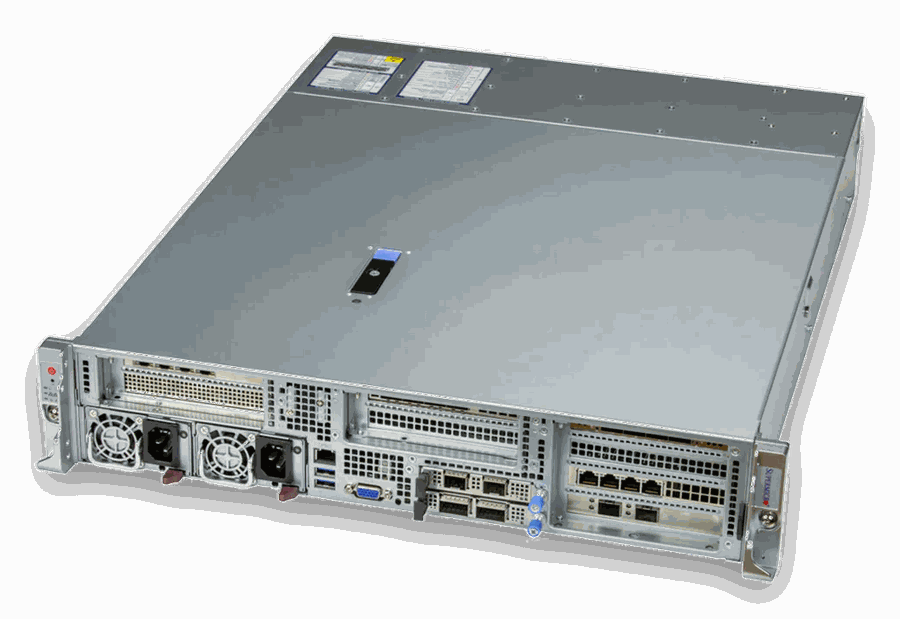
One cloud-native, microservices platform combining the Evolved Packet Core and the 5G Core. 4G subscribers and 5G standalone subscribers on the same infrastructure — so the migration is a configuration exercise, not a second network.
Open RAN & transport
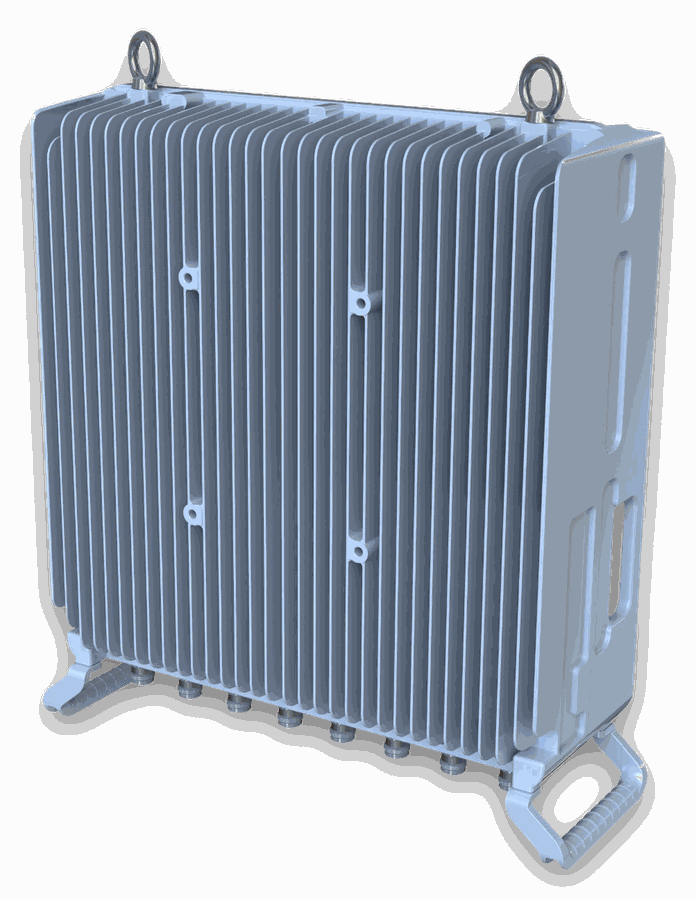
Open RAN turns the radio network into components you can select on merit. That only pays off if someone integrates them — and if the transport underneath aggregates 3G, 4G and 5G from every vendor on the site.
05 — Industries
The same core, radio and transport stack, dimensioned for the environment it has to survive.
Greenfield builds, technology refresh, capacity expansion, network modernisation and managed operations.
Sovereign private networks, mission-critical voice and isolated cores with national data-residency requirements.
Private 5G across remote fields, rigs and terminals where fibre is impractical and reliability is not optional.
Dense, low-latency coverage for automated cranes, AGVs, tracking and yard operations.
Rugged coverage for autonomous haulage, remote operation and worker safety across open pit and underground.
Airport-wide private networks for ground handling, security systems and passenger services.
06 — Why Quantum
Dubai-based engineering and logistics. Same time zone, same working week, same regulatory environment as the networks we deliver.
An active brokerage and sourcing desk for new and refurbished equipment — including parts the OEM has stopped quoting.
We stay after acceptance. AI Ops, O&M and optimisation are delivered by the team that built the network.
Open RAN, cloud-native cores and standards-based interfaces. No architecture that locks you to the next purchase order.
Insights
Acceptance is the only point at which an operator has leverage. Most acceptance criteria are written in a way that gives it away.
ReadFWA is the most commercially proven 5G use case in the region. Most of the variance in customer experience comes down to the device…
ReadOpen RAN failures are rarely about whether the interface is standards-compliant. They are about what each vendor assumed at the edges of the specification.
ReadStraight answers
An end-to-end telecom system integrator takes responsibility for a working network rather than for a box. Quantum Telecom plans the network, sources the equipment from whichever vendors fit the requirement, integrates the core, radio, transport, voice and management layers so they interoperate, deploys and commissions on site, runs acceptance against agreed KPIs, and then operates or supports the network. The operator signs one contract and holds one party accountable for the outcome.
Quantum Telecom is based in Dubai, United Arab Emirates, and delivers across the UAE and the wider GCC — Saudi Arabia, Qatar, Oman, Kuwait and Bahrain — as well as the broader MENA region including Egypt, Jordan and Iraq. Dubai is used as the logistics and staging hub for equipment moving into the region.
Yes. Quantum delivers greenfield mobile networks covering the 4G/5G dual-mode core, Open RAN compliant radio, IP transport, IMS for voice, OSS and BSS integration, CPE and the operations function. The same capability is delivered at smaller scale as a private 5G network for a single industrial site, a campus or a government facility.
A 5G standalone (SA) core is a cloud-native, service-based core network that runs 5G without depending on a 4G anchor. It is what unlocks the three 5G service classes: enhanced mobile broadband for high bandwidth, ultra-reliable low-latency communication for control and automation, and massive machine-type communication for dense IoT. It also enables network slicing, edge computing and VoNR voice. Quantum deploys 3GPP Release 16 compliant dual-mode cores that carry both 4G and 5G traffic on one platform.
Yes. Alongside new equipment, Quantum sources and supplies certified refurbished telecom hardware — radio units, routers, servers, transmission and core elements — tested and warranted. For operators managing capital budgets or maintaining older technology layers, refurbished supply is often the difference between a site staying on air and a site being decommissioned.
Send the part number, quantity and destination country and Quantum normally responds with availability, lead time and pricing within one business day. Where a part is scarce, the response will name the realistic sourcing window rather than a placeholder date.
It means Quantum takes the integration risk that a multi-vendor network normally pushes onto the operator. Rather than the operator managing five suppliers and arbitrating between them when an interface fails, Quantum owns the interfaces, the interoperability testing, the acceptance and the service level — across whichever vendors the network is built from.
Send a scope, a site count, a coverage target or just a part number. You will get an engineer's answer, not a brochure.